Electrical Guides
Electrical Guides and Tutorials
Twenty-one worked guides on the theory behind our calculators — from the ohms law wheel and resistor colour codes to cable sizing, LED design and 555 timer circuits.
Showing 21 of 21 guides
 Fundamentals
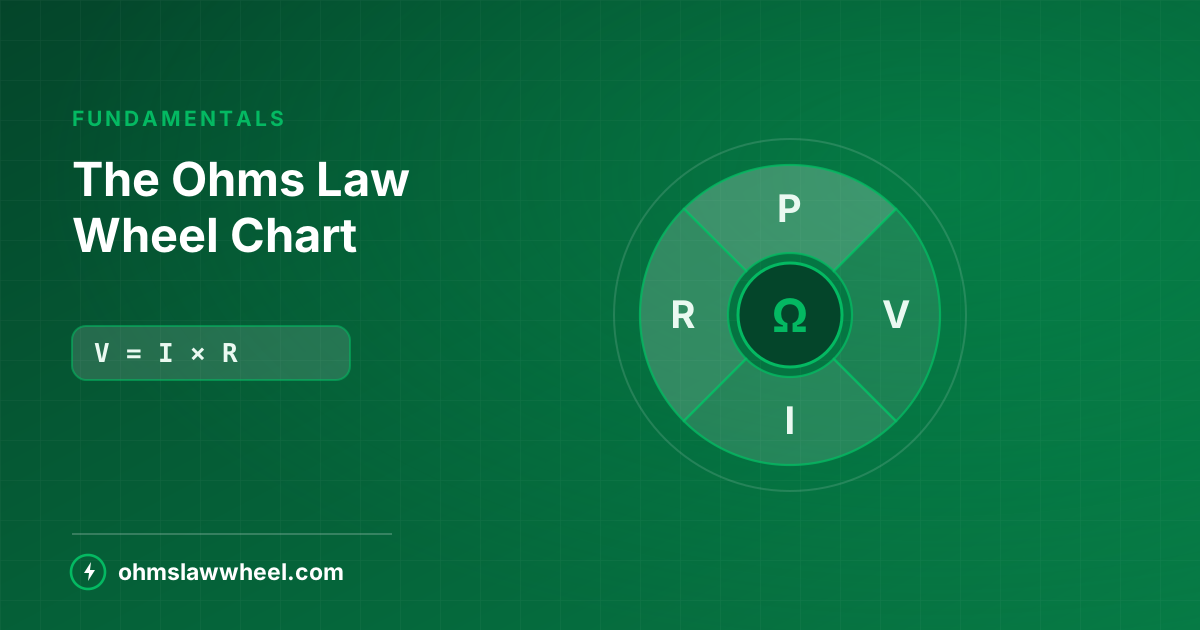
The Ohms Law Wheel Chart, Explained Quadrant by Quadrant
Twelve equations, four quadrants, one circle. Here is how to read the wheel and pick the formula that matches the two values you already know.
 Fundamentals
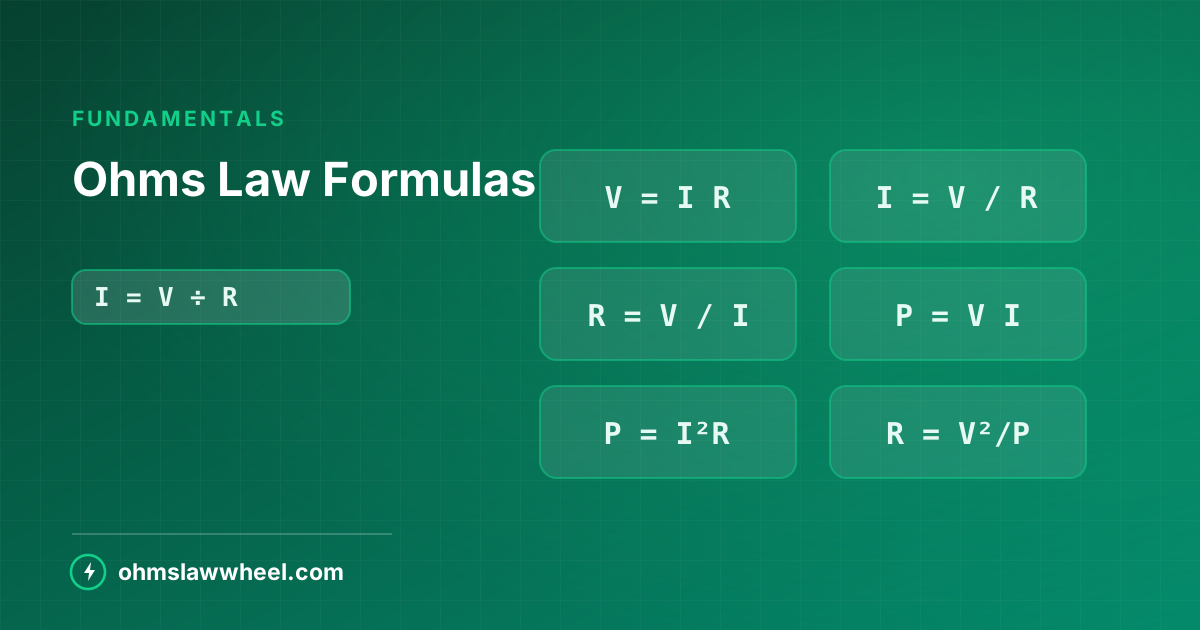
Ohms Law Formulas and How to Rearrange Them
The full formula set with units, rearrangements and worked numbers — plus the unit-conversion slips that produce most wrong answers.
 Fundamentals
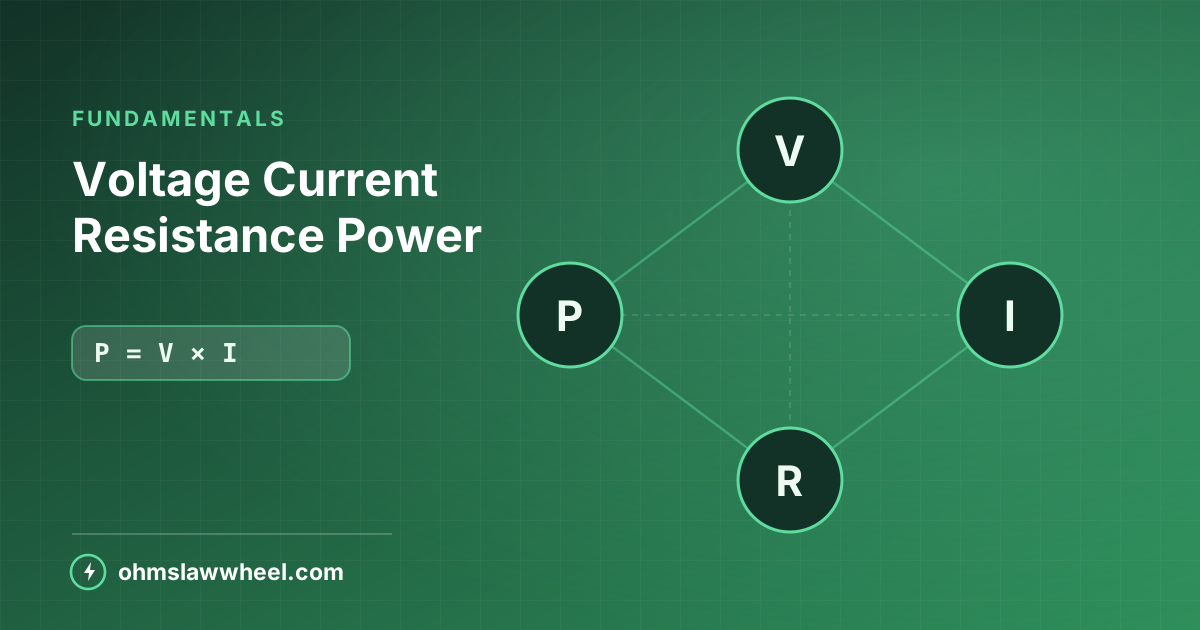
Voltage, Current, Resistance and Power Explained
What each of the four quantities really is, the analogy that makes them click, and how changing one changes the others.
 Fundamentals
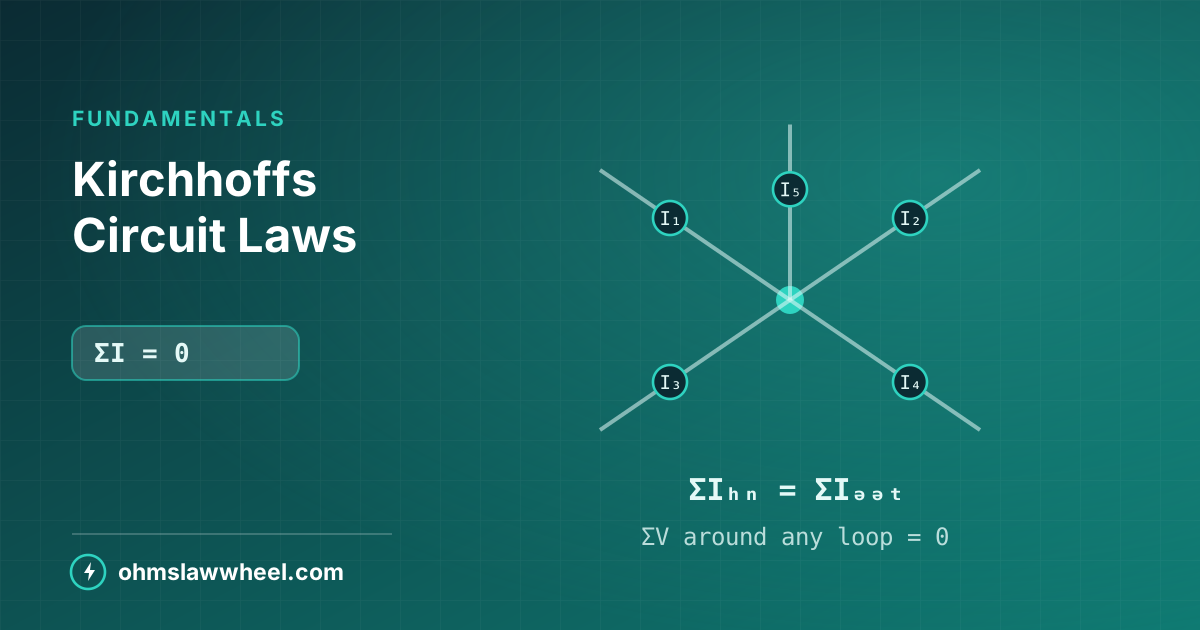
Kirchhoffs Circuit Laws Explained With Examples
Ohms law handles one resistor. Kirchhoffs two laws handle everything else — here they are, with sign conventions that actually make sense.
 Fundamentals
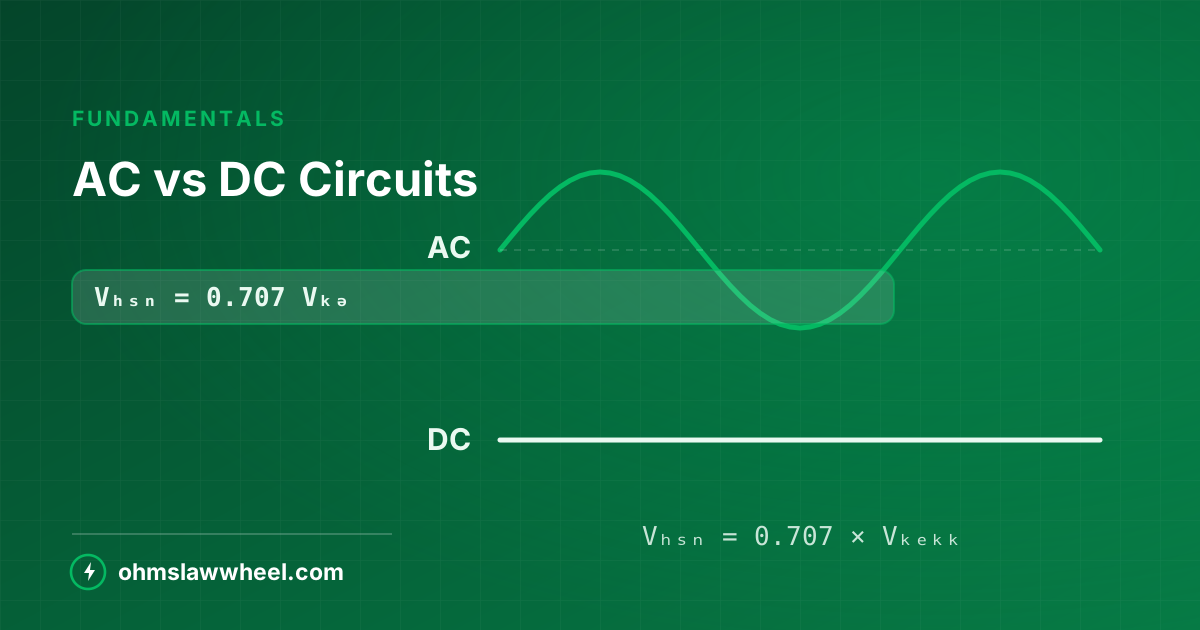
AC vs DC Circuits: What Changes and What Stays the Same
Where alternating current behaves just like direct current, where it does not, and why RMS is the number that matters.
 Practice & Tools
Ohms Law Practice Problems and Worked Solutions
Ten problems that build from a single resistor to power and cable loss, each with the formula choice explained rather than just the answer.
 Practice & Tools
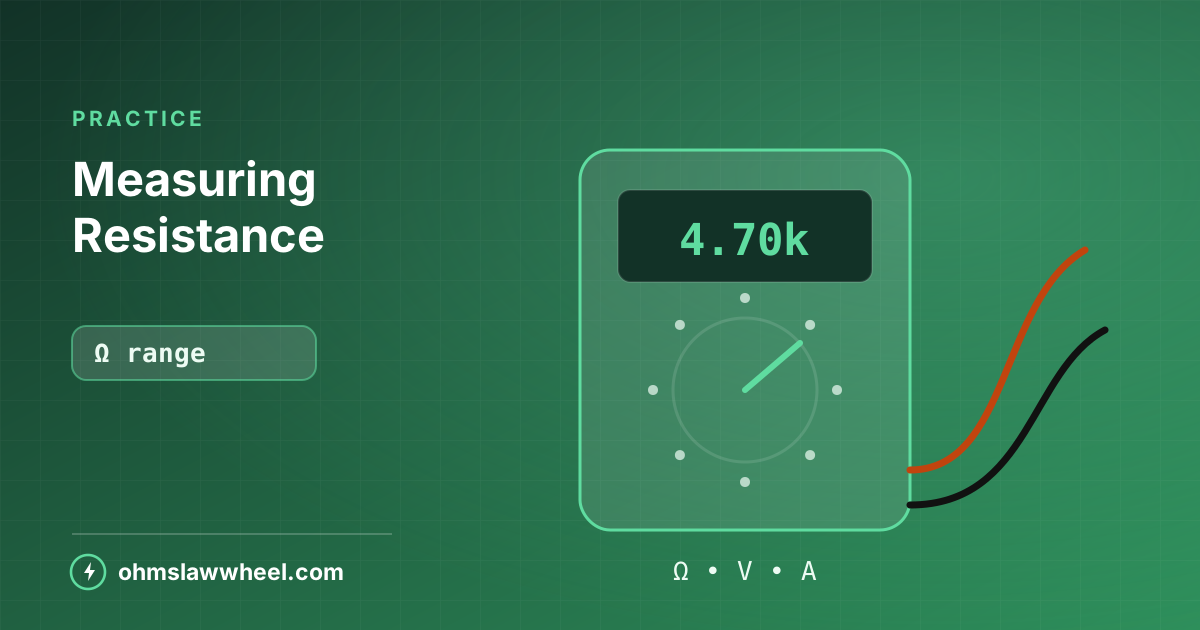
How to Measure Resistance With a Multimeter
Isolate, discharge, compensate, measure. The four-step routine that turns a rough reading into a trustworthy one.
 Resistors
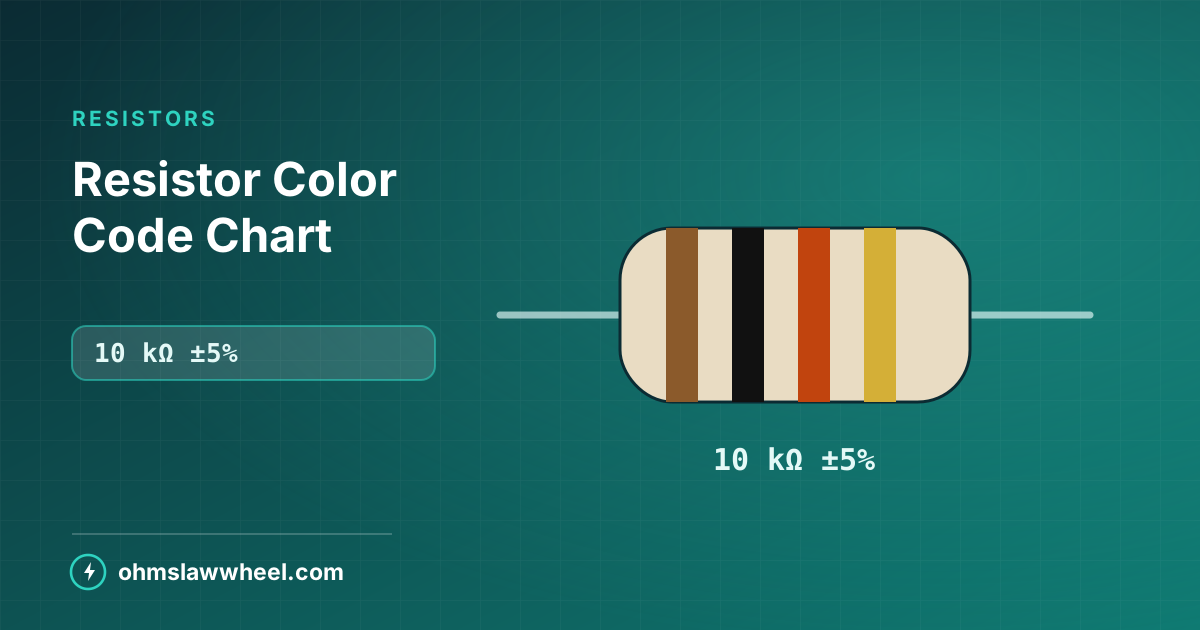
Resistor Color Code Chart and How to Read It
The full band chart, which end to start from, and the three examples that cover almost everything you will meet on a bench.
 Resistors
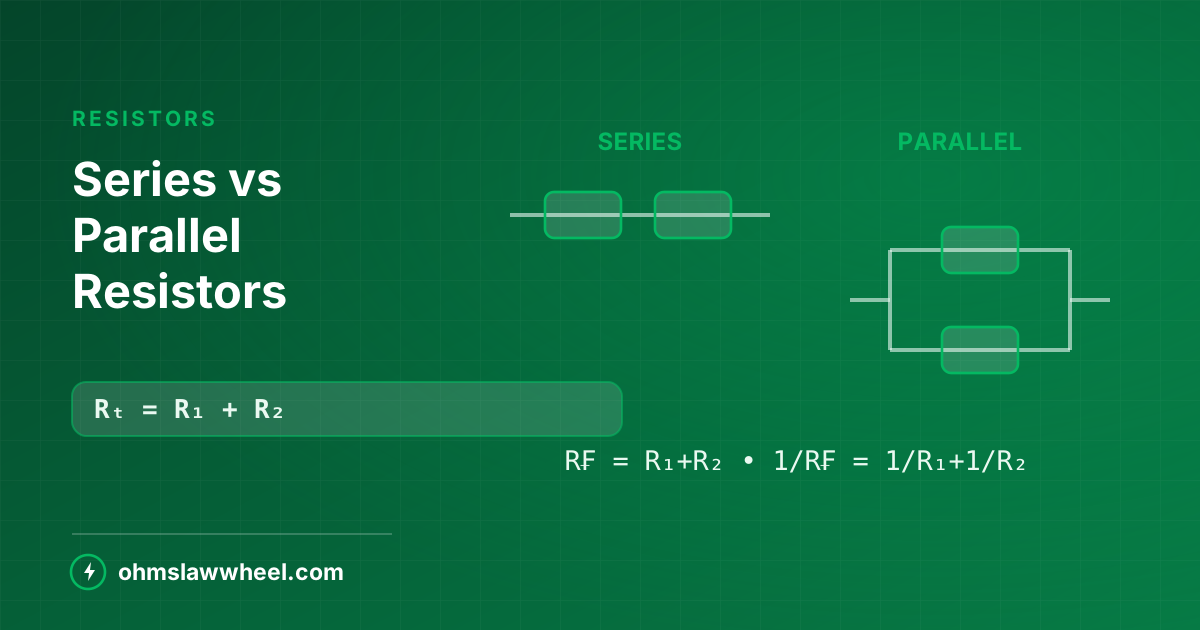
Series vs Parallel Resistors Explained
Series adds, parallel divides. The formulas, the sanity checks, and a mixed network reduced in four steps.
 Resistors
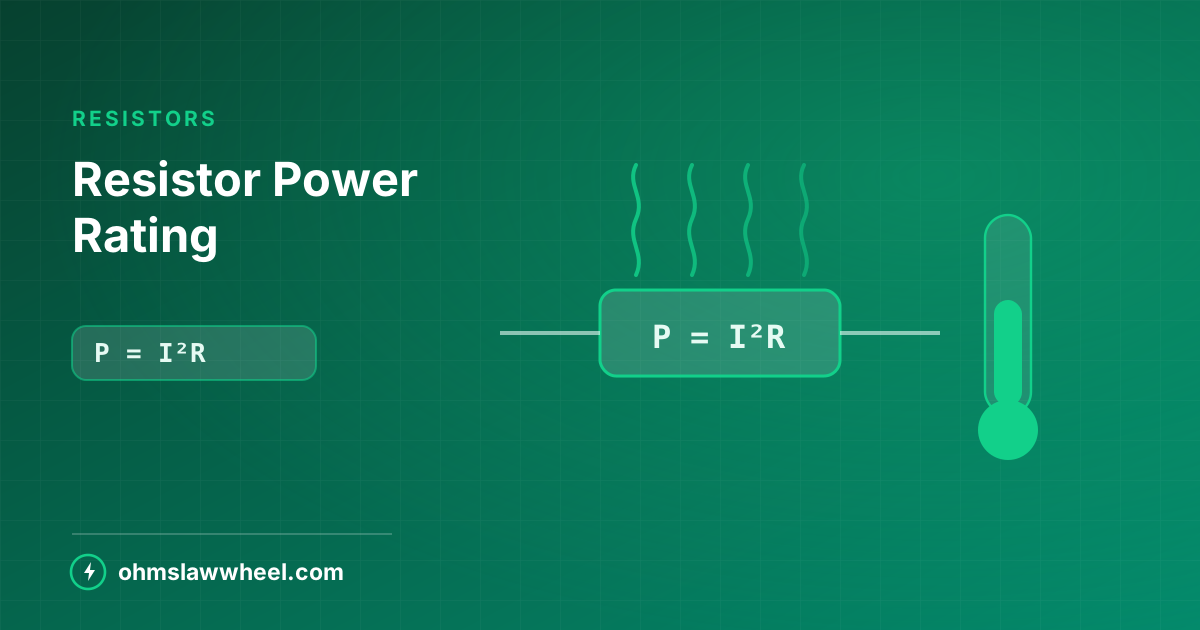
Resistor Power Rating and How to Size It Correctly
Calculate the dissipation, double it, then pick the next standard size up. Here is why that rule works and when it is not enough.
 Resistors
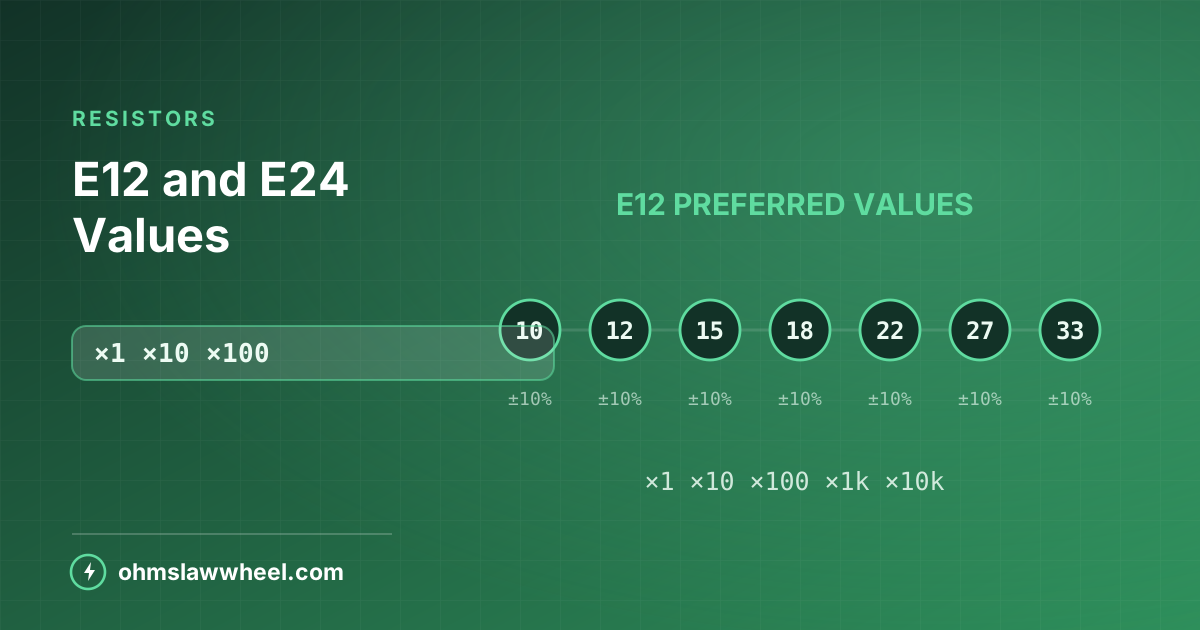
E12 and E24 Resistor Values Explained
Preferred values are a logarithmic ladder sized to tolerance. Here is the logic, the tables, and what to do when you need a value that is not on them.
 Resistors
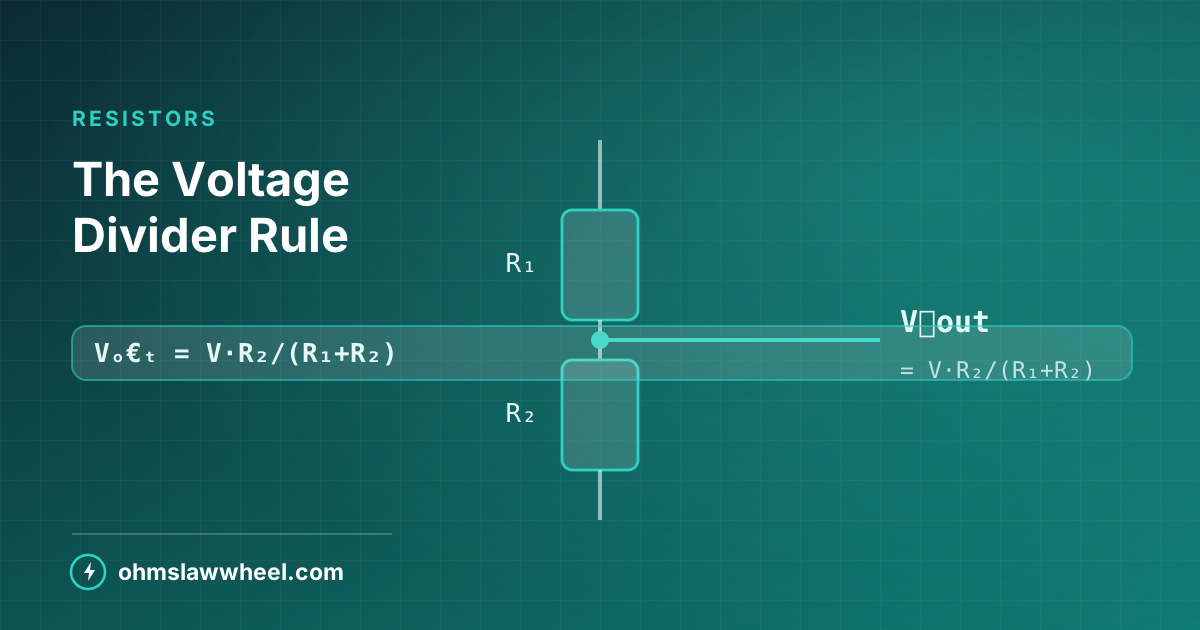
The Voltage Divider Rule Explained
Two resistors, one ratio, one very common mistake. How to design a divider that still reads correctly once something is connected to it.
 LED & Lighting
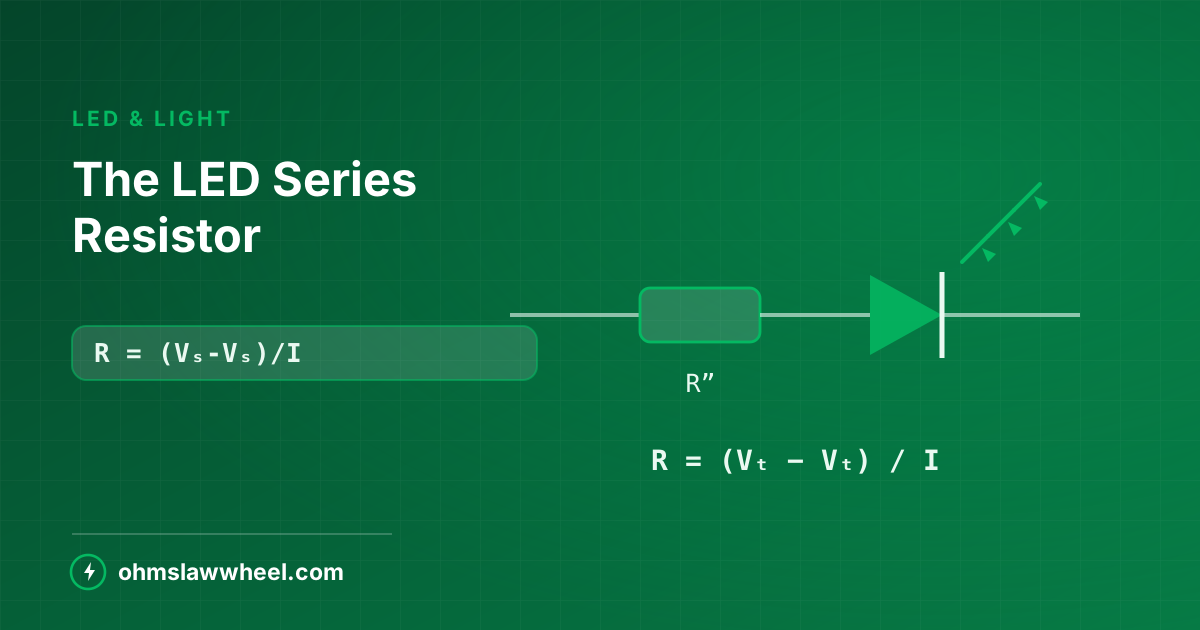
How to Calculate an LED Series Resistor
Subtract the forward voltage, divide by the current, round up. Plus the forward voltage table and why parallel LEDs need their own resistors.
 LED & Lighting
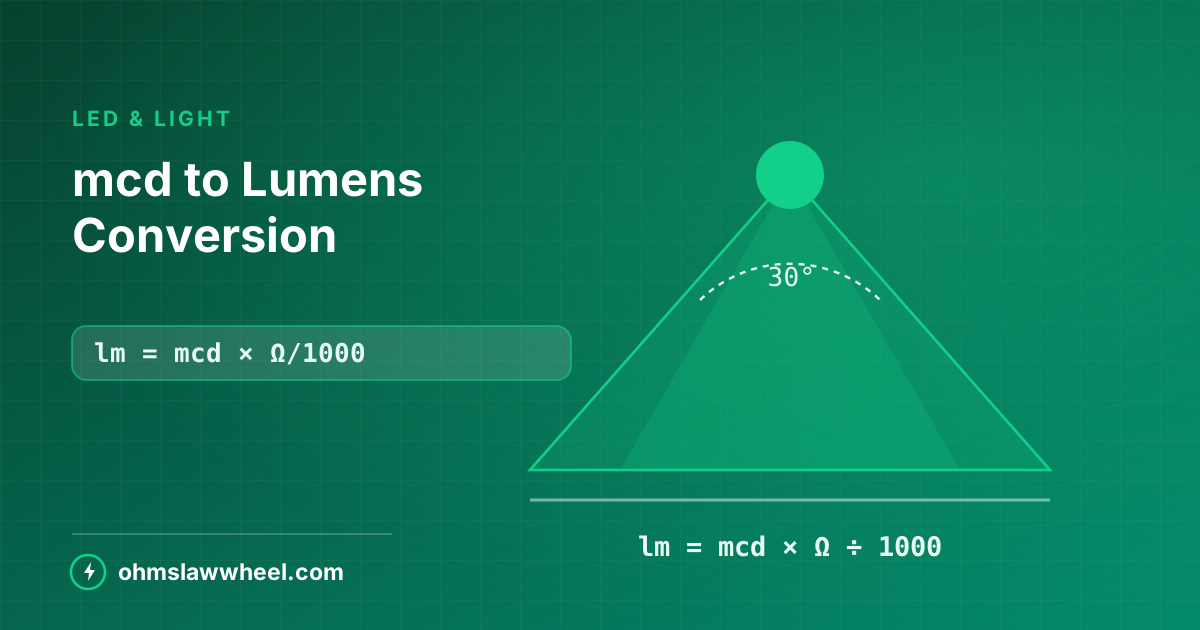
mcd to Lumens Conversion Explained
Candela measures intensity in one direction; lumens measure total output. The bridge between them is beam angle.
 Wiring & Cable
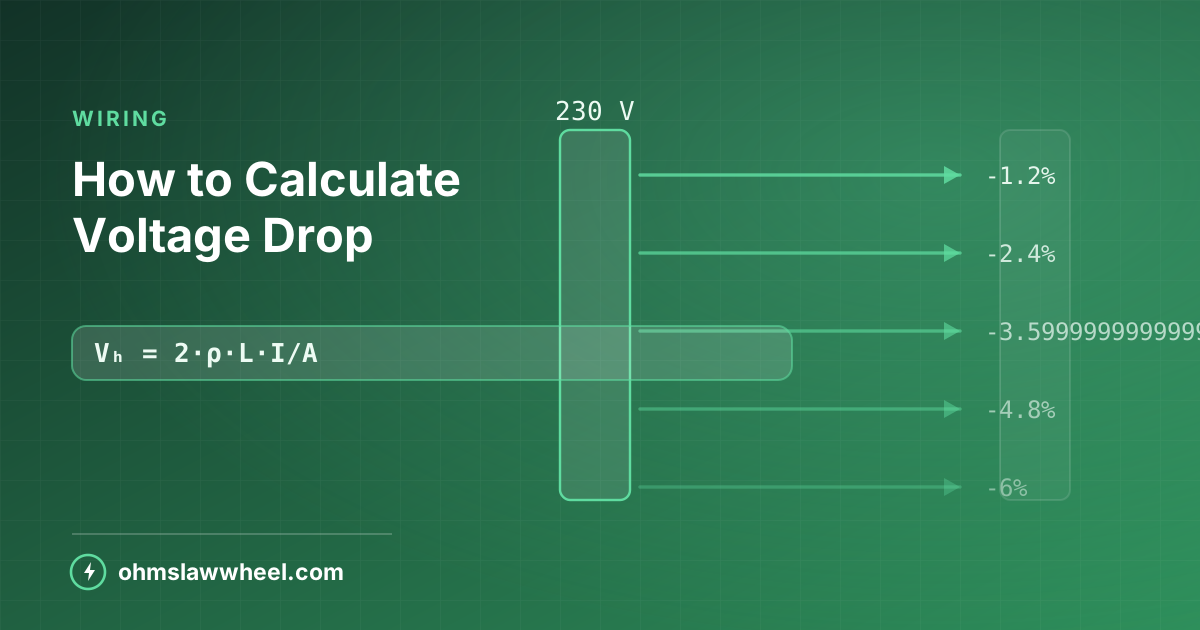
How to Calculate Voltage Drop
The cable is a resistor you did not plan for. The formulas for DC, single and three-phase, plus the percentage limits to design against.
 Wiring & Cable
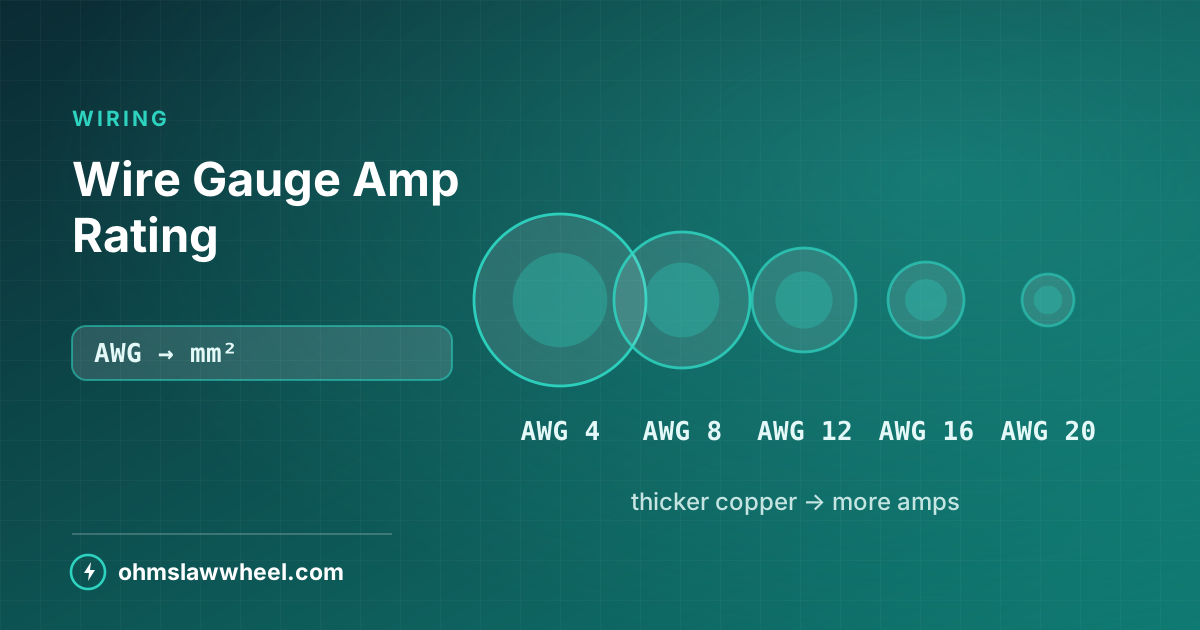
Wire Gauge Amp Rating: Choosing a Conductor Size
Ampacity keeps the cable from overheating; voltage drop keeps the load working. On long runs the second one usually decides.
 Wiring & Cable
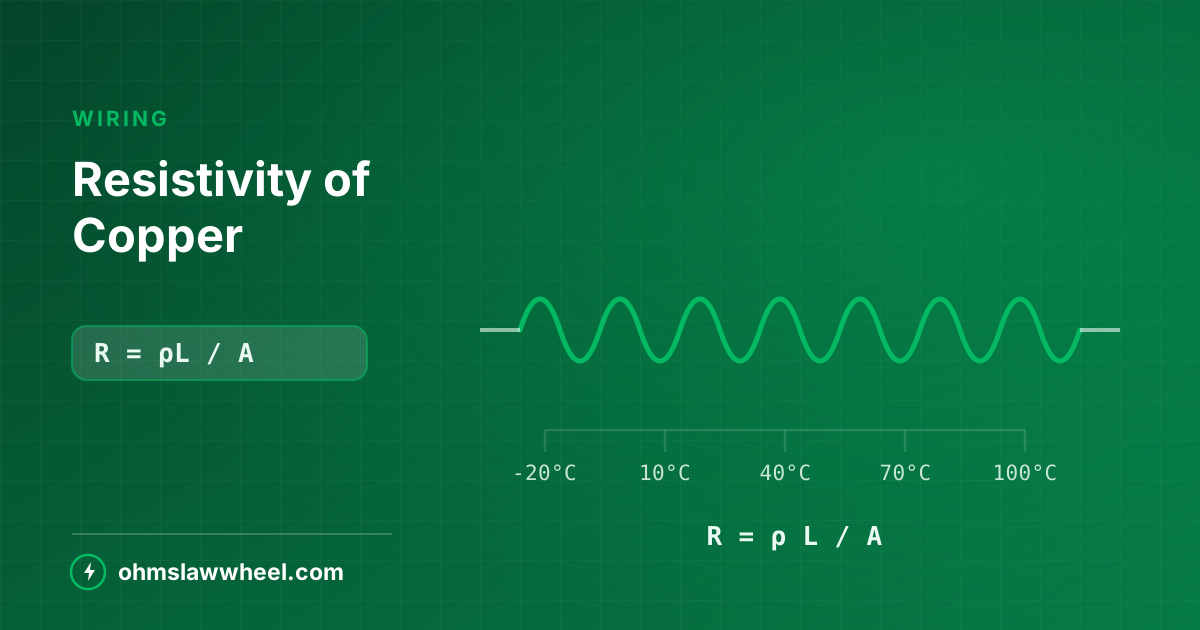
The Resistivity of Copper and How Temperature Changes It
One material constant, one formula, and a temperature correction that explains why a warm motor winding never reads what the datasheet says.
 Power & Energy
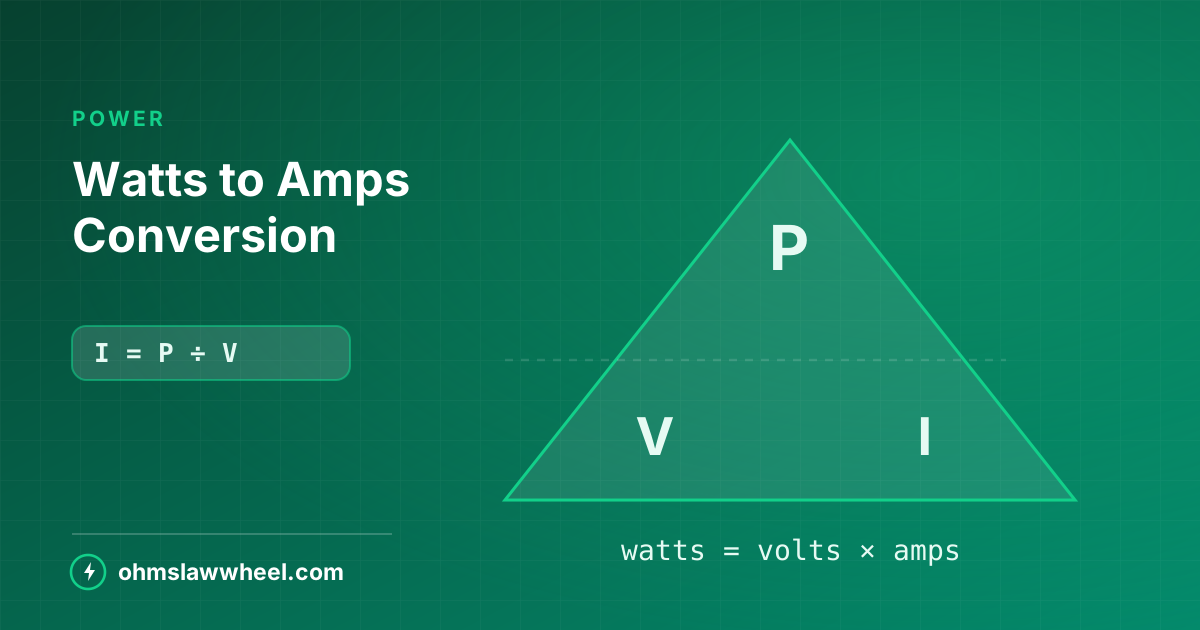
Watts to Amps Conversion Explained
Divide watts by volts. Then handle the two complications: power factor on AC, and the root-three factor on three-phase.
 Power & Energy
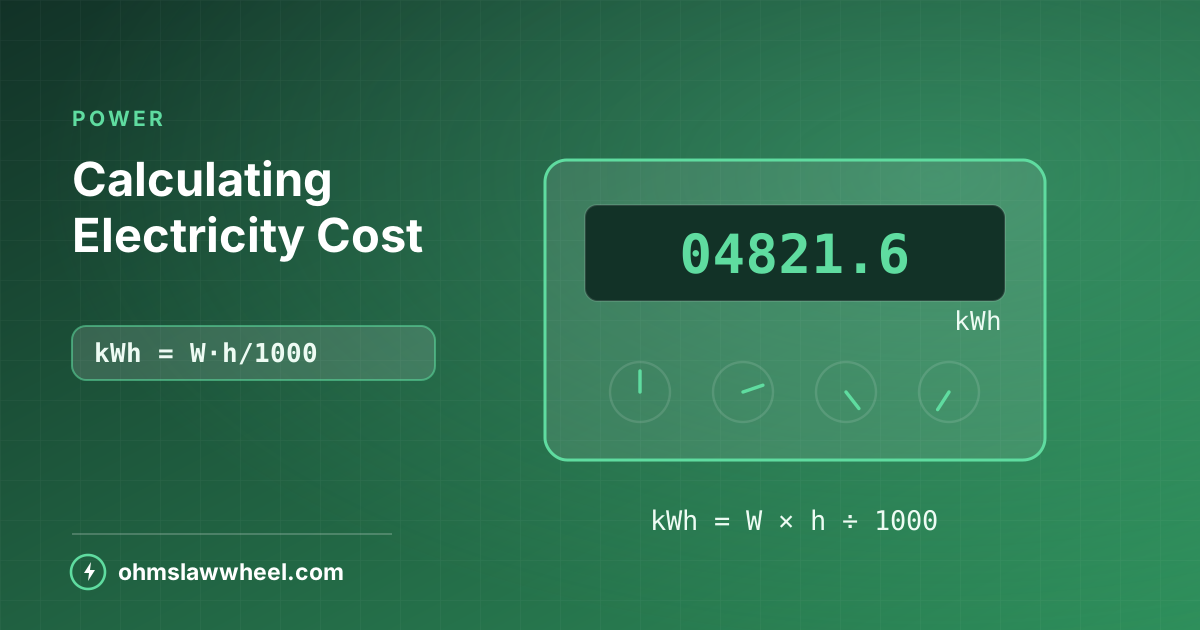
How to Calculate Electricity Cost for Any Appliance
Watts times hours divided by a thousand gives kWh. Multiply by your rate and the mystery of a standby load disappears.
 555 Timers
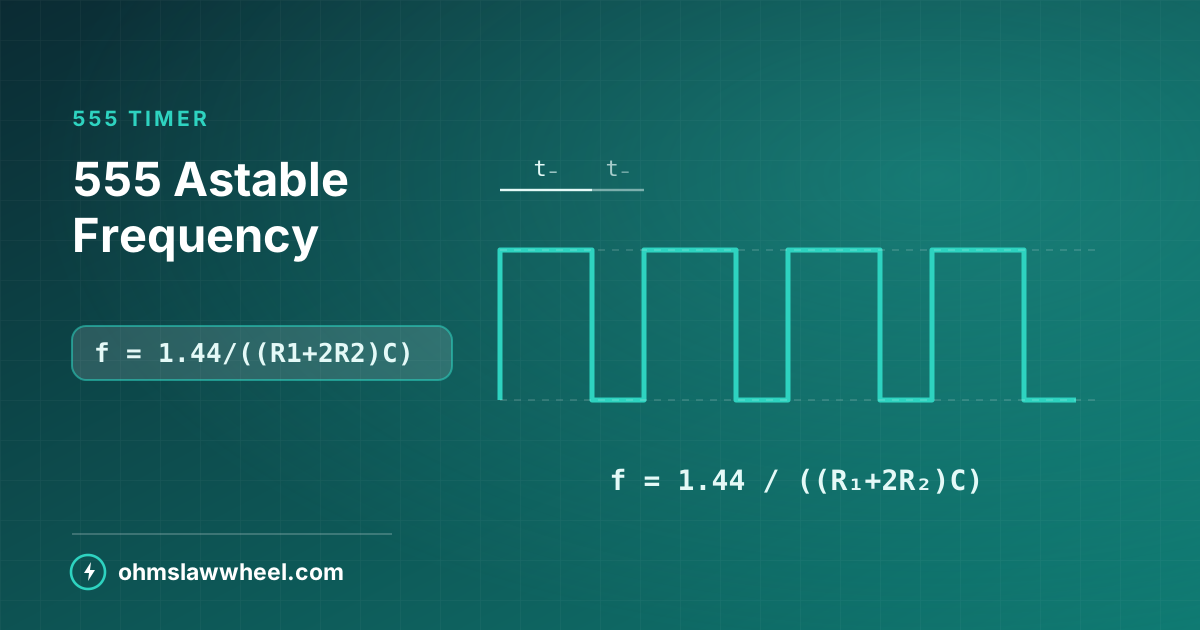
555 Timer Astable Frequency and Duty Cycle
Two resistors and a capacitor set the frequency. Why the duty cycle can never quite reach 50%, and the three standard ways round it.
 555 Timers
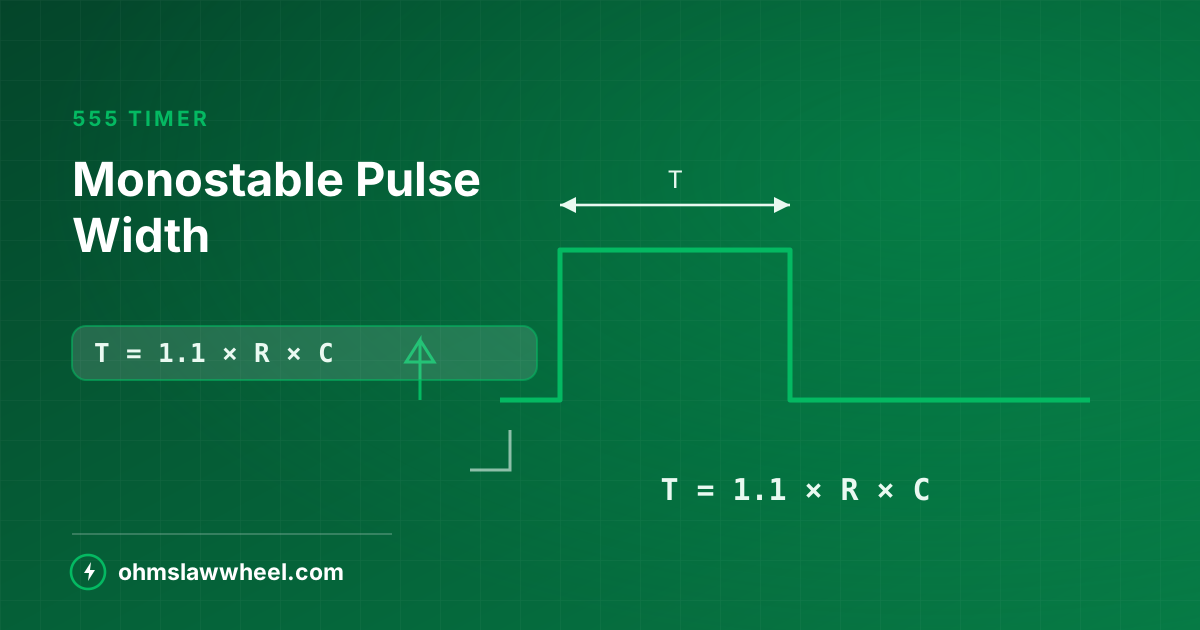
555 Timer Monostable Pulse Width Explained
One resistor, one capacitor, one pulse. The formula, the trigger rules that catch people out, and how to stop it retriggering.
No guides in this category yet.
Put the theory to work
Every guide links straight to the calculator that does the arithmetic for you.